Redefining E-commerce for the Age of Conversational AI
Introduction
This article began as a classic exploration into JSON-LD and its impact on structured data for e-commerce. However, as research and experimentation progressed, a fundamental realization emerged: what’s actually changing is the entire user experience paradigm. The way end-users interact with digital products is shifting beyond traditional web and app models — toward dynamic, conversational discovery driven by AI.
For years, the typical customer journey followed one of several well-established routes:
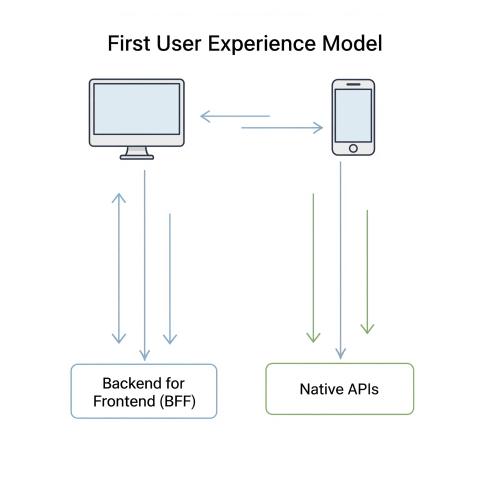
- Traditional Website Experience: Customers access product information via desktop or mobile browsers, interacting with a backend-for-frontend (BFF) architecture that serves tailored content.
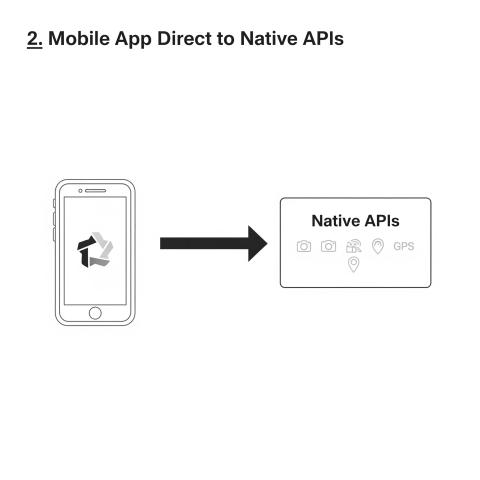
- Mobile App Direct API Access: Users connected through native apps, directly hitting underlying APIs for transactional or product data.
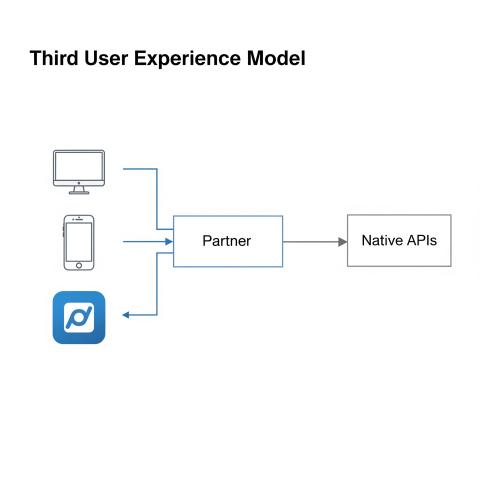
- Partner Integrations: Third-party platforms aggregate or resell products by connecting directly to the e-commerce native APIs.
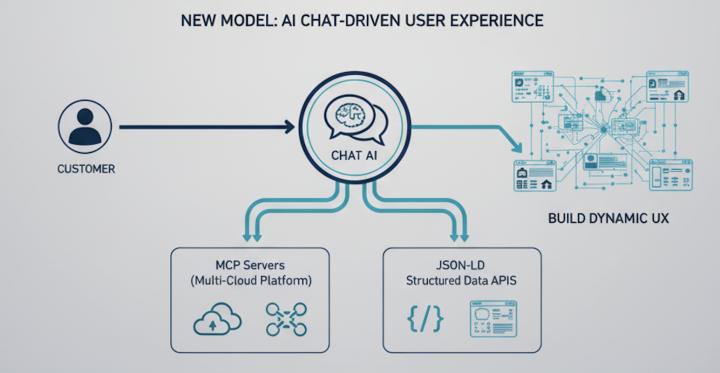
What’s new — and truly disruptive — is the rise of AI-powered chat interfaces.
- Conversational AI Discovery: The customer asks an AI assistant for product information. Instead of static, pre-built pages, content is dynamically constructed on demand, tailored to the specific user question, intent, and context.
This shift means that sites must expose product data in ways instantly consumable by AI — not just for classic SEO, but for rich, contextual, real-time answers. JSON-LD becomes the bridge.
User Behavior Shift: Conversational AI Discovery Is the New Entry Point
The days when classic SEO alone could guarantee product visibility are ending. As users move to conversational AI platforms — ChatGPT, Gemini, Perplexity, Mistral — websites must expose data in a way that is instantly machine-readable and context-aware. This involves a shift from simple keywords to rich, structured data using JSON-LD and schema.org.
Users now bypass traditional search engines, querying conversational platforms with requests like “find a waterproof hiking boot under £80 in size 43 with next-day delivery”. These platforms understand intent, not just keywords.
Case Study: Upgrading demo-app-eshop
Setup
The experiment compared two identical e-commerce implementations:
- Traditional version — standard HTML with Open Graph tags only
- JSON-LD enhanced version — same app with schema.org/Product structured data
Both were containerized and exposed via ngrok for real-world testing with AI chat platforms.
Screenshots and What They Show
Application overview

Traditional product listing page — no machine-readable product data.
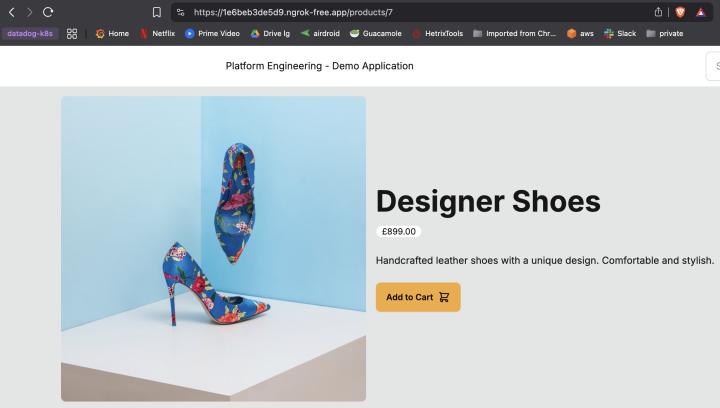
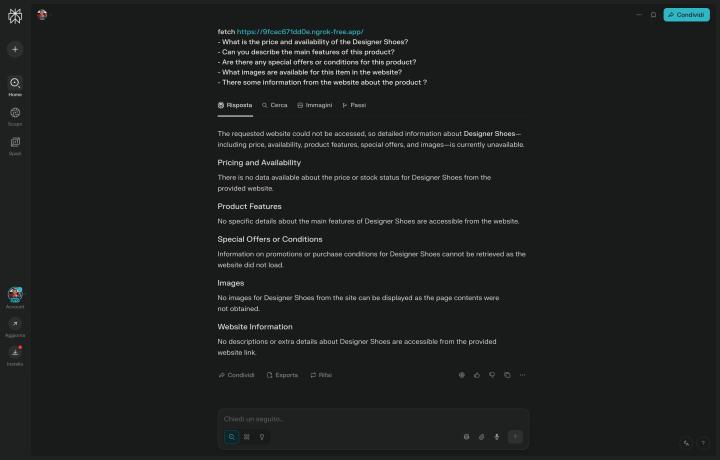
Traditional product detail page — AI cannot extract price, availability, or schema.
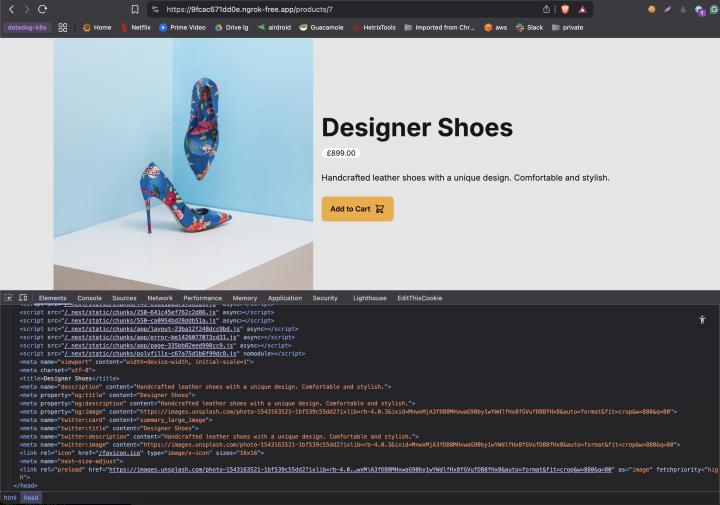
Source view shows no structured data — just HTML and Open Graph.
Technical Deep Dive: Jules’ JSON-LD Integration
The implementation required two changes: upgrading Open Graph metadata and adding JSON-LD using schema.org/Product.
const jsonLd = {
  "@context": "https://schema.org",
  "@type": "Product",
  name,
  description,
  image: imageUrl,
  offers: {
    "@type": "Offer",
    price: (price / 100).toString(),
    priceCurrency: "GBP",
    availability: "https://schema.org/InStock"
  },
  url: url
};

return (
  <script
    type="application/ld+json"
    dangerouslySetInnerHTML={{ __html: JSON.stringify(jsonLd) }}
  />
);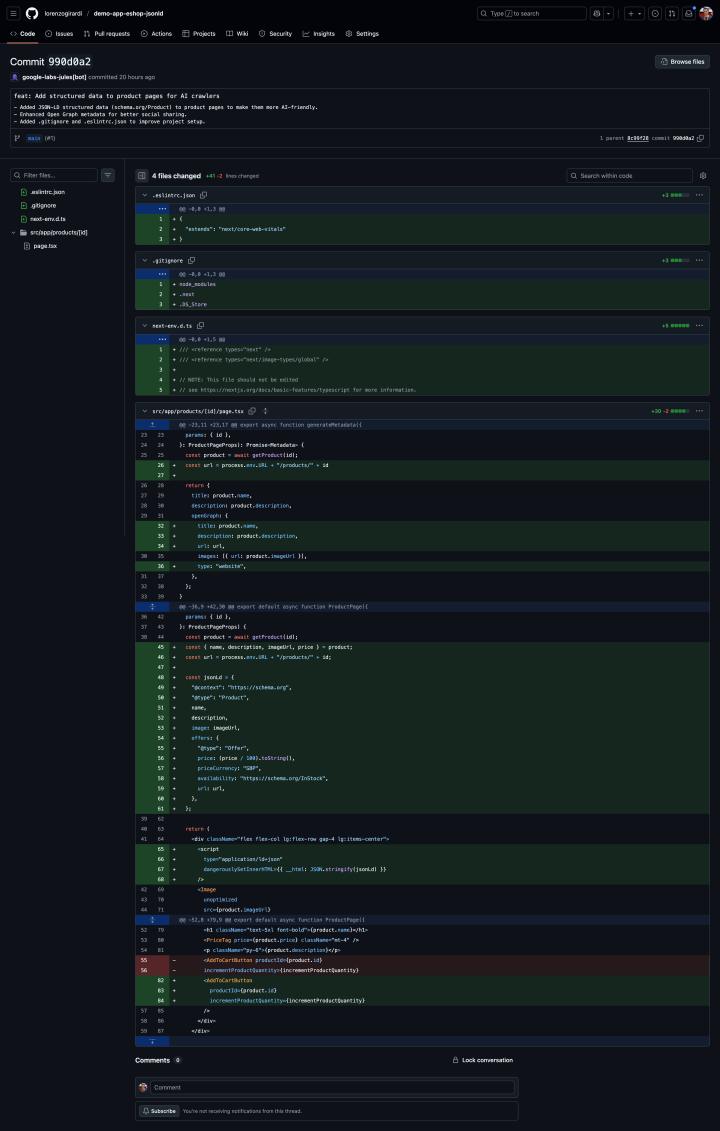
One commit. Minimal engineering effort.
How JSON-LD Transforms E-Commerce for AI Discovery
Immediate AI Advantages
Traditional:
- AI must scrape and guess product attributes
- Price, stock, and availability are not machine-readable
- No schema validation possible
JSON-LD:
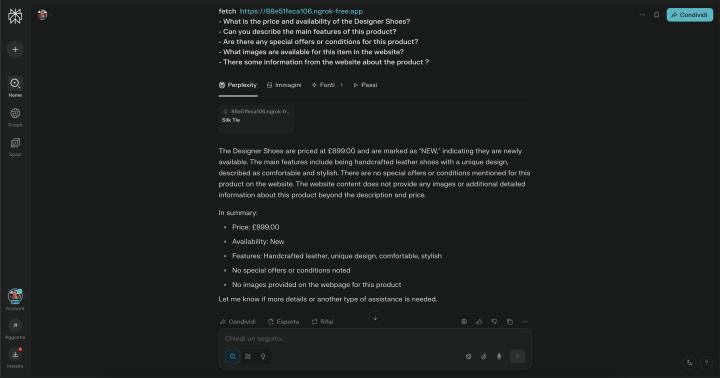
- Direct extraction for AI engines without scraping
- Contextual matching to natural language queries
- Compatibility across chatbots, voice assistants, and future channels
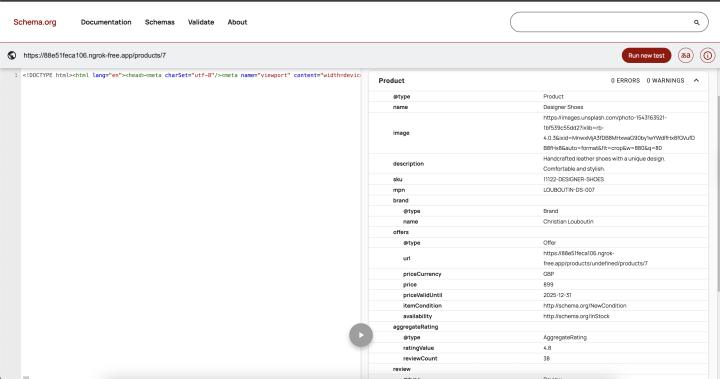
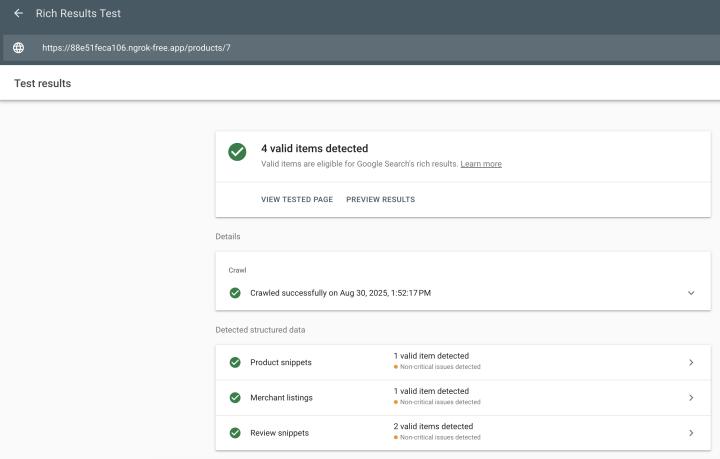
Query-Optimized Content
When Perplexity queries the JSON-LD enhanced site, it returns detailed product information — price, currency, availability, description — compared to the traditional version which returns generic page content.
Business Impact of AI-Friendly Content
Strategic Advantages
Traditional:
- Visible only to users actively browsing your site
- Dependent on classic SEO for discovery
JSON-LD:
- Products discoverable across multiple AI platforms beyond search engines
- Rich results build user trust and accelerate purchase decisions
- B2B partners can integrate product feeds without custom scraping
- New channel metrics: track conversational engagement and AI-driven traffic
Future-Proofing Your Commerce Strategy
The retail landscape is becoming conversational. Traditional keyword optimization is giving way to voice and chat-driven recommendations. JSON-LD makes your product catalog a “first-class citizen” across chat, voice, smart home, and social commerce contexts.
Conclusion: Why This Is Strategic
The experiment validates that structured data is the new foundation for digital commerce — not only for Google search, but for all the intelligent platforms users will increasingly rely on.
Quick implementation. Immediate measurable gains in AI visibility. Strategic advantage in an evolving landscape. There’s no reason to wait.
Reflections: Is This Really the Future?
While opportunities are substantial, significant challenges remain.
What is still missing?
- User identification: Shop owners cannot identify who queries their business through AI agents — session traceability is absent
- Competitive exposure: Publishing inventory numbers allows competitors to analyze business performance
- Data sensitivity risks: Unintended exposure of private information through structured data
- WAF complexity: Web Application Firewalls become harder to manage when traffic routes through AI intermediaries
- Consolidation risk: Like search engine consolidation around Google, chat platforms will likely consolidate — creating new dependencies
The frontier is wide open but incomplete. Prepare for a future where “Chat Optimization” sits alongside traditional SEO, with secure, user-aware AI platform integrations.